

NURSERY PLANTERS AND POTS MARKET OVERVIEW
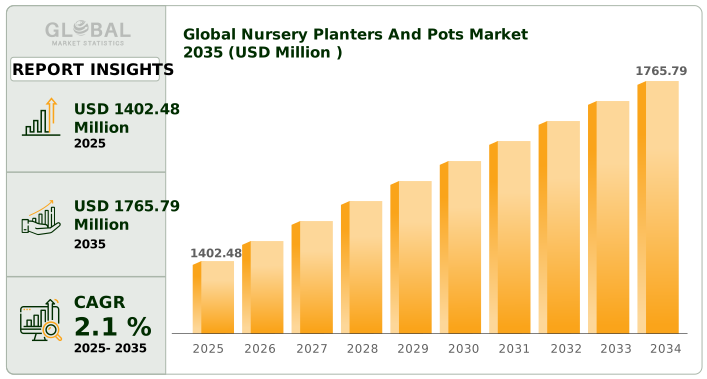
The global nursery planters and pots market size was USD 1402.48 million in 2026 and is projected to touch USD 1765.79 million by 2035, exhibiting a CAGR of 2.1% during the forecast period.
Nursery planters and pots represent containers designed to grow young plants, together with seedlings and trees, in managed environmental conditions. Nursery containers are manufactured from several materials, including standard plastic, yet also offer biodegradable alternatives that include peat-paper mixtures alongside coco-coir and recycled leaf litter. Plant containers help plants develop until they reach the point for permanent placement. The product design includes specific features which stop roots from encircling through the incorporation of copper-infused walls. Horticulture depends on these tools as significant equipment that serves both forestry and gardening fields by supporting multiple plant sizes that span from tree to ornamental dimensions.
The market expands because customers focus on environmental awareness and governmental restrictions on single-use plastics, as well as people choose to garden at home and cultivate ornamental plants. Environmental awareness increases as more businesses in both commercial nurseries and home gardens adopt biodegradable pots. The Nursery Planters And Pots Marketplace receive support from sustainability-oriented demand as well as recent developments in materials science and manufacturing technologies. The development of new biodegradable materials that combine performance enhancements alongside waste leaf litter execution and paper pulp inclusion alongside coco-coir developments creates expanded market possibilities for consumers.
Download Free sample to learn more about this report.
GLOBAL CRISES IMPACTING NURSERY PLANTERS AND POTS MARKET- COVID-19 IMPACT
"Nursery Planters and Pots Industry Had a Mixed Effects Due to Home Gardening Surge and Supply Chain Disruptions during the COVID-19 Pandemic "
The Global COVID-19 pandemic has been unprecedented and staggering, with the market experiencing lower-than-anticipated demand across all regions compared to pre-pandemic levels. The sudden market growth reflected by the rise in CAGR is attributable to the market’s growth and demand returning to pre-pandemic levels.
The COVID-19 pandemic produced unexpected residential building sector expansion worldwide, but it also introduced substantial business channel disruptions to all regions relative to pre-pandemic conditions. Home gardening activities, which increased during lockdown periods, led to fast market expansion. The global pandemic disrupted nursery planters and pots supply chains as it created supply shortages for imported products due to disrupted raw material availability. Manufacturing delays combined with distribution challenges emerged from lockdowns that also limited travel, which affected commercial nursery operations because landscaping and construction activities stopped.
LATEST TREND
"Biodegradable Innovation and Sustainability Focus to Drive Market Growth"
The nursery planters and pots industry observe an escalating demand for biodegradable and sustainable products since customers become more environmentally aware and plastic reduction rules become stricter. The market shows increased interest in waste leaf litter pots because these recycled materials dissolve faster than regular biodegradable items, with decomposition rates between 1.5-6 times more efficient. The product innovation delivers pots which enhance soil health through natural decomposition, thus satisfying environmental reduction targets along with improved soil conditions.
NURSERY PLANTERS AND POTS MARKET SEGMENTATION
By Type
Based on Type, the global market can be categorized into Nursery Bed Planters and Nursery Planter Pots
- Nursery Bed Planters: Headsets allow professional growers to cultivate extensive plant populations in bulk as seedlings before they move them to another environment through their bulk production capacity. Such holding units are the preferred choice in professional environments because of their high productivity levels.
- Nursery Planter Pots: The market offers nursery planter pots, which are single growing containers produced with plastic, ceramic and biodegradable materials for plant cultivation and retail. Plastic pots prove valuable to small-scale and large-scale nurseries because they deliver easy management and flexibility features.
By Application
Based on application, the global market can be categorized into Commercial Nurseries and Municipal Nurseries
- Commercial Nurseries: Large-scale plant propagation and retail operations at commercial nurseries require planters and pots as their main production tools. Mass production alongside distribution requires Industrial nurseries to find durable solutions that reduce costs.
- Municipal Nurseries: Public green initiatives and park landscaping projects receive their plants from municipal nurseries. Public gardening facilities use nursery containers as a method to cultivate decorative plants together with native plant varieties for public green spaces that include parks and urban development programs.
MARKET DYNAMICS
Market dynamics include driving and restraining factors, opportunities and challenges stating the market conditions
Driving Factors
"Environmental Consciousness and Sustainability Trends to Boost the Market"
A Factor in the Nursery Planters And Pots Market growth is that heightened environmental consciousness, as well as sustainable gardening practices becoming more prevalent. The use of biodegradable containers made from recycled leaf litter waste offers benefits, including better soil quality, together with Carbon emission reduction, while matching gardeners' sustainability requirements. Advances in consumer values drive strong demand toward plastic container substitutes because people focus more on waste management and plastic pollution facts. Market expansion, together with product innovation, occurs through the product-to-movement alignment of sustainability movements.
"Regulatory Pressure and Plastic Reduction Initiatives to Expand the Market"
The market receives momentum from plastic reduction efforts organized by governments and industries. Sustainability drives the market because municipalities place restrictions on single-use plastics and increase disposal expenses on non-biodegradable materials which spurs nurseries and retailers towards sustainable options. The regulatory environment provides impetus to biodegradable pot technology research while generating new market potential for materials that fulfill both environmental alongside performance standards.
Restraining Factor
"Performance Limitations and Cost Considerations ""to Potentially Impede Market Growth"
The relationship between performance quality and cost represents a major constraint on the biodegradable Nursery Planters And Pots Market. Some biodegradable options show environmental advantages, yet they struggle with mechanical stability together with water-absorption properties and integration into modern manufacturing equipment. Comparative research between paper pulp nursery pots and polyethylene containers shows these performance-cost relationships that affect market adoption mostly in professional applications.
Opportunity
"Material Innovation and Consumer Segmentation Create Opportunity in the Market"
The market has ample potential through innovative material development combined with precise marketing strategies. Different customer segments behave differently when it comes to paying additional costs for sustainable environmental benefits through biodegradable packaging. Different consumer types benefit from specific marketing tactics that lead to optimal value collection from each market segment. Extensive growth possibilities exist because innovations in biodegradable materials achieve better performance while maintaining environmental benefits in both performance and sustainability. The creation of waste leaf litter pots from existing waste materials provides evidence that waste recycling generates better degradable products and solves urban waste problems.
Challenge
"Consumer Education and Distribution Channel Development Could Be a Potential Challenge for Consumers"
The main obstacle to market success lies in the low understanding that consumers show regarding biodegradable options. The growing environmental awareness shows little impact on consumer understanding of the existence and advantages of alternative pot materials. Innovative products need new distribution methods which must break through existing supply chain frameworks built for usual materials. Studies of market channel choices among nursery producers demonstrate how distribution choices become complicated by business characteristics that affect which channels producers use.
NURSERY PLANTERS AND POTS MARKET REGIONAL INSIGHTS
North America (U.S.)
The Nursery Planters And Pots Market in North America shows substantial growth because home improvers and eco-conscious gardeners are expanding their interest in sustainable gardening practices. The United States Nursery Planters And Pots Market is showing increasing recognition of both the conventional plastic pot pollution and the advantages of biodegradable pots. Consumer acceptance of biodegradable pots has increased substantially in the United States market because aesthetic enhancements brought solutions to previous market barriers. Scientists within the area are developing better material science approaches for nursery pots which boost operational capabilities without compromising ecological advantages.
Europe
The European customer base strongly supports sustainable nursery products through their evolving environmental rules and market tastes. Biodegradable pot adoption has favorable market conditions in Europe because customers demonstrate a strong willingness to pay more for environmentally responsible products. Scientists have made significant progress in studying biodegradable substances and their utilisation within horticulture throughout this territory.
Asia
The Nursery approaches and technology selection in Asian markets differ between Indonesia and Nepal through distinctive operational practices. Operational practices, together with economic considerations from fish hatchery and nursery management studies in Nepal, determine which containers get selected for utilization. The success rates of seedlings at Indonesian oil palm nurseries depend heavily on container selection since wrong planting media combined with improper container sizes result in failed nurseries. The area presents substantial development opportunities because people understand ecology better, and farming methods implement sustainable manufacturing techniques.
KEY INDUSTRY PLAYERS
"Key Industry Players Shaping the Market Through Innovation and Sustainability Leadership"
The Nursery Planters And Pots Market are developing due to key industry players who use strategic innovation in sustainable material development for their product line. The companies use innovative production methods to improve the performance values of their biodegradable clay containers while preserving environmental advantages. The company invests in expanding its product range with different sustainability features that serve distinct market sections and product applications. Through retailer and environmental organisation partnerships, the companies boost marketplace access and customer education. The players achieve marketplace growth by committing resources to research and development and process optimization alongside the creation of complete sustainability narratives, which build their competitive advantages in today's evolving market.
List Of Top Nursery Planters And Pots Companies
- NSI (U.S.)
- Anderson Pots (U.S.)
- HC Companies (U.S.)
- Kunal Garden (India)
- Sinorgan SA (Spain)
- Longji Plastic (China)
- Henry Molded Products (U.S.)
- McConkey (U.S.)
- Shengerda Plastic (China)
- JainPlastopack (India)
KEY INDUSTRY DEVELOPMENT
March 2024: The introduction of "Biodegradable Recycled Waste Leaf Litter Pots" is based on research demonstrating their exceptional decomposition performance. These innovative pots utilize urban green waste that would otherwise be treated as waste, creating a circular economy solution that enhances soil quality while reducing waste volumes. Research shows these pots exhibit decomposition rates 1.5-6 times greater than other biodegradable options, regardless of their thickness.
REPORT COVERAGE
The study encompasses a comprehensive SWOT analysis and provides insights into future developments within the market. It examines various factors that contribute to the growth of the market, exploring a wide range of market categories and potential applications that may impact its trajectory in the coming years. The analysis takes into account both current trends and historical turning points, providing a holistic understanding of the market's components and identifying potential areas for growth.
The Nursery Planters And Pots Market is poised for a continued boom pushed by Biodegradable Innovation and Sustainability Focus, the Environmental Consciousness and Sustainability Trends, and Regulatory Pressure and Plastic Reduction Initiatives. Despite challenges, which include confined Consumer Education and Distribution Channel Development, the demand for Material Innovation and Consumer Segmentation supports marketplace expansion. Key industry players are advancing via technological upgrades and strategic marketplace growth, enhancing the supply and attraction of Nursery Planters and Pots.
| REPORT COVERAGE | DETAILS |
|---|---|
|
Market Size Value In |
US$ 1402.48 Million in 2026 |
|
Market Size Value By |
US$ 1765.79 Million by 2035 |
|
Growth Rate |
CAGR of 2.1 % from 2026 to 2035 |
|
Forecast Period |
2026 - 2035 |
|
Base Year |
2025 |
|
Historical Data Available |
2022-2024 |
|
Regional Scope |
Global |
|
Segments Covered |
Type and Application |
Related Reports

-
What value is the Nursery Planters and Pots Market expected to touch by 2035
The global Nursery Planters and Pots Market is expected to reach USD 1765.79 Million by 2035.
-
What is CAGR of the Nursery Planters and Pots Market expected to exhibit by 2035?
The Nursery Planters and Pots Market is expected to exhibit a CAGR of 2.1% by 2035.
-
Which are the top companies operating in the Nursery Planters and Pots Market?
NSI, Anderson Pots, HC Companies, Kunal Garden, Sinorgan SA, Longji Plastic, Henry Molded Products, Nieuwkoop Europe, ELHO, McConkey, Shengerda Plastic, JainPlastopack, Elay Plastic
-
What was the value of the Nursery Planters and Pots Market in 2025?
In 2025, the Nursery Planters and Pots Market value stood at USD 1373.64 Million.